Monday, June 27, 2022

The Three Temptations of Buddha


When Siddhartha Gautama (563-483 BCE) left his childhood palace to find wisdom in the forest he was desperate and willing to try anything. Like many spiritual seekers, Siddhartha had grown convinced that his liberation lay in finding the right teacher, the right practice, and the right theory-of-everything to sooth his addled mind. He studied with every guru in the forest and they helped a little, but each time, their teachings collapsed under the weight of their own beautifully ornamented contradictions.

In his deepening despair Siddhartha fell into an extreme form of asceticism that nearly killed him. None of it worked so he quit searching. He let it all drop. He found his way back to the middle path, sat down in the forest, and began to meditate.

According to legend, a demon named Mara came to see him, for it is the job of demons to interfere with the progress of spiritual aspirants. To this end, Mara offered Siddhartha three temptations.

The first temptation was lust. Mara ordered his two daughters to perform an elicit dance, sure that this would divert the young man from his meditation. But instead of arousal, Siddhartha felt only compassion for these young women so clearly caught in a hell of their own, trapped by their father into a rather, shall we say, disreputable profession.

The second temptation was power. Mara offered to make Siddhartha king of the world—the same temptation, incidentally, that Satan offered Jesus in the wilderness 500 years later. The stories are essentially the same: demons attempting to lure our heroes off their respective paths toward transcendent illumination. But worldly power held no allure for Siddhartha (as it also would not for Jesus).

The third temptation was one of personal paradise—to leave the embodied realm and vanish into Nirvana, a celestial realm of bliss far above this world of woe. But Siddhartha said no. It was never his own liberation he was after, but the liberation of the world. With the defeat of Mara, Siddhartha attained enlightenment and became the Buddha, the Awakened One.

Thus the bodhisattva ideal was born. In Mahayana Buddhism the bodhisattva (bodhi: illumined, sattva: being) is the spiritual ideal—an illumined being with one foot in Nirvana and one foot in the world. In a significant way, Jesus plays this role for many Christians—the presence of the eternal formless sacred source here in the world of temporal forms.

In both of these figures—Jesus and Buddha—we see the polarities of divine and secular, formless and formed, sacred and profane unified in a living mystery. And in both the Christian and Buddhist traditions we are likewise called to be the presence of this unified paradox by manifesting our inner Christ and embodying the bodhisattva vow—working for the alleviation of the suffering of all sentient beings. As Jesus said in Matthew 25:40, “Whatever you did for one of the least of these brothers and sisters of mine, you did for me.”

Pedagogical parables, legends, and metaphors like the three temptations story appear throughout the world’s wisdom literature. When we take these evocative tales into our contemplation what do they mean for us? These stories lead us into an increasingly nuanced, skillful, and disciplined mastery of the always delicate task of self-actualization. They help us give birth to the sacred potential locked inside us since the universe was born. There are so many ways to get it wrong, and only a few ways to get it right. 


[This piece was originally published in the July/August 2022 issue of Unity Magazine, and is reproduced here with permission.]

Tuesday, April 12, 2022

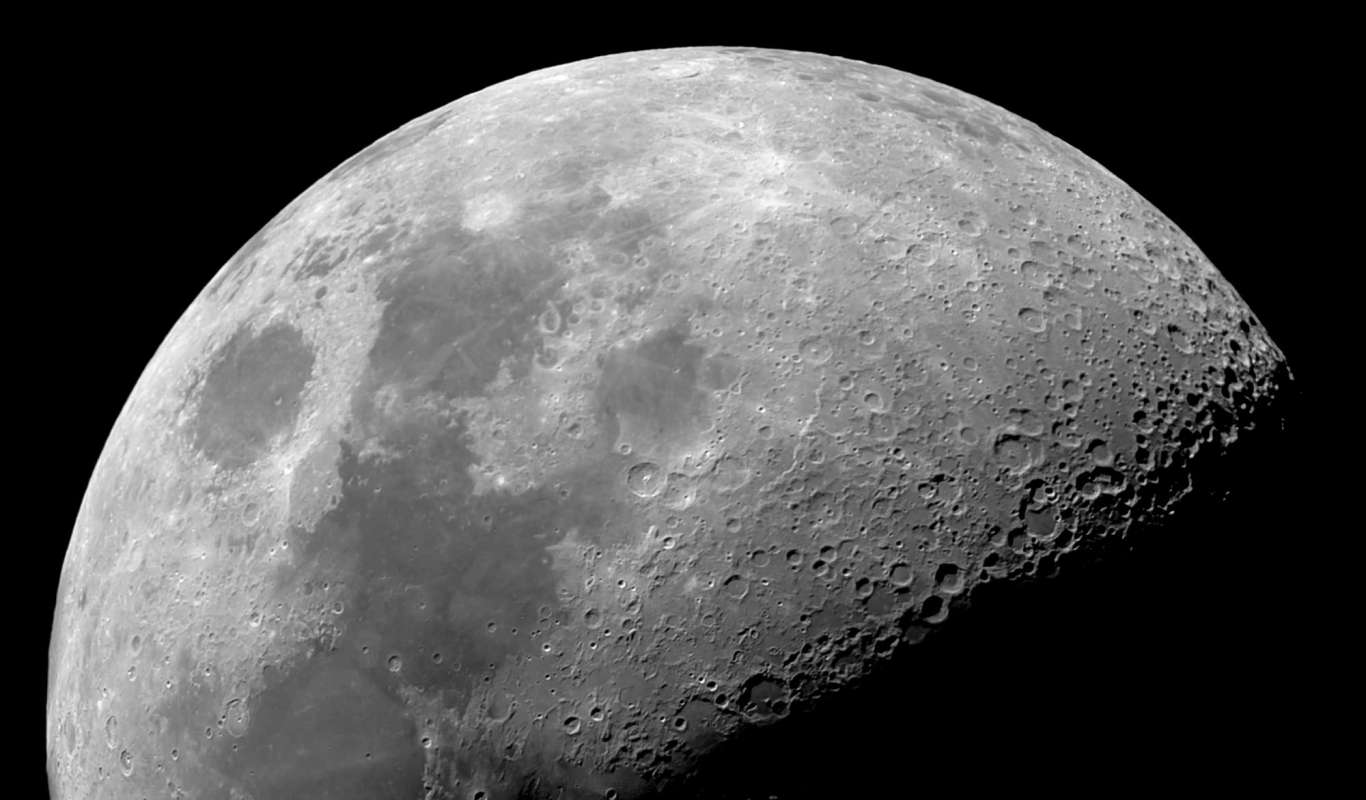
No Water, No Moon

 The arid prose of Zen aphorisms sometimes leave you thirsty. Yet something
shines through—something nameless, beyond all categories, and, in the best possible sense of the word, empty. Empty as in full of potential. Empty as in big enough to hold the whole world.

In his classic collection Zen Flesh, Zen Bones, (C.E. Tuttle Company, 1957) Paul Reps gathered together more than 160 such aphorisms, as elusive, fluid, and shimmering as trout in a stream. And none more evocative than the story of a woman named Chiyono.

“When the nun Chiyono studied Zen under Bukko of Engaku she was unable to attain the fruits of meditation for a long time. At last one moonlit night she was carrying water in an old pail bound with bamboo. The bamboo broke and the bottom fell out of the pail, and at that moment Chiyono was set free! In commemoration, she wrote a poem:

“In this way and that I tried to save the old pail. Since the bamboo strip was weakening, and about to break, until at last the bottom fell out. No more water in the pail! No more moon in the water!”

We meet Chiyono in a recognizable moment—the frustration many of us feel when after years of spiritual practice we find ourselves right back at the beginning, or nowhere at all – just as unhappy and scattered as we ever were. Was it all for nothing?

And then in the course of her ordinary work, carrying a pail of water from the well, something snapped—in this case, the bamboo strap holding the wooden slats of her pail together. As poetic images go, you can’t do better than this. Notice how we, like Chiyono, work so hard to keep it together, thinking we can manage the world, thinking we actually possess its treasures in our conceptual containers – our health, our money, our loved ones. But in a snap the lie of ownership is laid bare.

The true moment of satori (enlightenment) is her response to the pail-fail. Most of us would curse and complain, but years of practice prepared her for this shift. Instead of being angry, she’s relieved, even jubilant—“No more water in the pail! No more moon in the water!”

We do not own the air in our lungs, the water in our pails, or the love in our hearts—yet we need them to live. The very engines of our existence come from outside us, and are beyond control. We experience them, but we do not own them. The water in our pail retains its unity with the One Water—it only seems separate. And what a laughable confusion—to think our pail holds the moon because we see its reflection there. That is why part of us—a deep and unconscious part—recognizes Chiyono’s relief when the bottom falls out. The charade was exhausting. It turns out attachment was the root of our suffering.

What a sense of freedom it would be to finally let go and realize that not only is there nothing to grasp, there isn’t anyone to do the grasping. All forms are empty, in the best possible sense of the word—fluid, ephemeral, shimmering. We are fleeting moments in an interconnected field of energy, consciousness, and matter without border or boundary. Sure, we still need to bring water into the kitchen to cook our rice, but we do so now with a sense of engagement, not ownership or control. 

[This piece was first published in my column "A to Zen" in the May/June 2022 issue of Unity Magazine, and is reproduced here with permission.]

Friday, February 18, 2022

The Perennial Philosophy

What if beneath the bewildering variety of the world’s religions there lay a small set of
common, universal ideas? What if behind the cacophony of competing truth-claims their lay a unifying silence in which all tensions resolve in mellifluous harmony?

The search for a perennial philosophy is an ancient search. The Rig Veda of ancient India proclaims that “The truth is one – the sages call it by many names.” In the Hellenistic world ancient Greeks and Romans were agog at the bewildering array of spiritual and philosophical systems their conquests revealed to them. Surely, they pondered, these must be a foreground of a deeper universality.

In the European Renaissance of the 15th century the dream of a unified theory of wisdom found new currency in Marsilio Ficino’s Platonic Academy in Florence, and in the exalted humanism of Pico della Mirandola’s bestselling Oration on the Dignity of Man. The longing for wisdom is universal, Mirandola wrote, “because it can be retraced in every tradition.”

           Twentieth-century British author Aldous Huxley brought the subject into the mainstream with his 1945 book The Perennial Philosophy which the New York Times in its glowing review called, “the most needed book in the world.” Borrowing the phrase Philosophia Perennis from 17th-century philosopher Gottfried Leibniz, Huxley deftly curated passages from Eastern and Western theologies and wove them together with his own connective commentary. 

           Here are the five core ideas Huxley expressed throughout his writing career:

That there is a Godhead or Ground, which is the unmanifested principle of all manifestation. Here Huxley articulates the Supreme Being archetype, the universal notion of an ultimate reality or “Ground,” behind all of the names of God – Brahman, Dao, Father, Jesus, Allah, Shakti, Amitabha Buddha, and so on. Whatever it is, it lies beyond the multifarious forms that emanate from it.

The Ground is transcendent and immanent. With this Huxley affirms a key paradox – that ultimate reality is at once beyond and within us. Whether it’s the panentheism of Vedanta, the universal incarnation (and salvation) of progressive Christianity, the Buddhist concept of Dharmakaya, or the Sefirot of Kabbalah, this idea finds expression in theologies everywhere.

That it is possible for human beings to love, know, and become identified with the Ground. Here Huxley illuminates the upward spiral taught in all wisdom traditions – a journey from lower consciousness to enlightenment and oneness.

That to achieve this unitive knowledge, to realize this supreme identity, is the final end and purpose of human existence. Our hunger for wisdom is not a personal choice but an innate imperative. Like salmon swimming upriver to spawn at the place of their birth, we long to return to the source from which we and all things come and not only understand it, but become it.

That there is a Law or Dharma, which must be obeyed, a Dao or Way, which must be followed, if humanity is to achieve its ultimate purpose. Ancient sages left behind maps, books, and practices which, if followed, would facilitate our awakening. We don’t have to reinvent the wheel. The perennial philosophy is in all the books we already own.

If Huxley’s right, and I think he is, then all religions are true – as metaphors or maps. At their best, any of them will work. Or as 18th century Hindu saint Ramakrishna put it, “Many paths to the summit.” But a map is only as good as the traveler. It is we who must do the walking.

[This piece was originally published in my A to Zen column in the March/April issue of Unity Magazine, and is reproduced here by permission.]

Friday, December 17, 2021

You Are With Me

Susan Crouch
A young musician in ancient Israel named David killed Goliath of the Philistines with only a rock and a sling, a feat no one else had even been willing to try. Word traveled fast. That’s what happens when you achieve the impossible. When it came time to replace the aging King Saul, David was a shoo-in.

Forged from an unruly alliance of nomadic tribes beset with rivalries, resentments, and incompetent middle managers, running ancient Israel was no picnic. Add to that constant warfare with neighboring enemies, high-stakes palace intrigue, eight wives, a few assorted mistresses, and 18 children – you get the picture. David was over-extended.

Life for David and his people was complicated, dangerous, stressful, and sodden with grief. Sound familiar?

As beloved as David may be throughout Judaism and Christianity, he was far from perfect. As the saying goes, power corrupts, and absolute power corrupts absolutely. If it’s a paragon of virtue you want, look elsewhere. But if you want an eccentric brimming with the pathos, perception, and panache of a rock star, David’s your man.

On top of everything else David was also a poet of startling sensitivity and depth. His 23rd Psalm is a declaration, a prayer, a plea, a song, a dream, and an affirmation.

“The Lord is my shepherd, I shall not want./He makes me lie down in green pastures;/he leads me beside still waters;/he restores my soul./He leads me in right paths/for His name’s sake.” So it begins. The central metaphor is God as shepherd, and we as the vulnerable in need of guidance, sustenance, and protection. David’s idealized pastoralism draws us into a world where the generative bounty of nature extends beyond the food and water it provides – the restorative love of God pours forth from every blade of grass. And the holiness inherent in all things edifies our innate wisdom to choose the right path forward.

“Even though I walk through the darkest valley,/I fear no evil;/for you are with me;/your rod and your staff – /they comfort me.” Whether our problems are personal, (a dissolving marriage, a drunk driving conviction) or global (a pandemic with burgeoning death tolls), we long for the transcendent perspective of this passage: to recognize and acknowledge the divine presence with us, and within us. A rod and staff, shepherds tools, viscerally convey the practiced skill and ineffable wisdom of this innate divine guidance.

And true to his warrior lifestyle (for who can ever escape their lived context?) David closes with this: “You prepare a table before me/in the presence of my enemies;/you anoint my head with oil;/my cup overflows./Surely goodness and mercy shall follow me/all the days of my life,/and I shall dwell in the house of the Lord/my whole life long.” (Psalm 23, NSRV) Here we feel the world-weary maturity of the king – how he no longer wishes to conquer every enemy seeking instead the peace of coexistence. Not every conflict has to be resolved – sometimes the best we can hope for is that our conflicts be endured with a modicum of dignity and grace. How? By recognizing our infinite abundance: “my cup overflows.” As do all of ours. And finally, David’s glowing affirmations: “Surely goodness and mercy shall follow me all the days of my life.” When we know and embody these truths, we find not only the strength to endure the hard road we’re on, but the freedom to enjoy it.

[A version of this piece was first published in my "A to Zen" column in the January/February edition of Unity Magazine as "David's Poetic Affirmation," and is reproduced here with permission.]
Sunday, October 24, 2021

My Coyote Teacher

I live in San Diego. I know, I’m lucky that way.

Yesterday as I was doing yoga on the back deck, my dog began to bark. The breeze through the Eucalyptus trees and the coos of mourning doves were instantly replaced by the most jarring alarm calls my dog knows how to make. My breath quickened and the hair on the back of my neck stood up.

I guess I’ll meditate later.

I peered over the back fence into the field of chaparral that slopes down to the lake in the distance. There he was, six feet from the gate – the biggest, healthiest coyote I’ve ever seen.

Coyotes are a part of life around here, as they are in many places. In the dawn’s early light they’re often seen trotting home after a night of foraging. We’re regularly awakened by their yipping, mewling, howling, and barking as they convene their mysterious meetings in these fields beneath the stars.

But this was different.

He was alone, walking slowly, deliberately through the mid-morning light. His coat was thick. He looked strong and at ease with the world. Something opened inside of me – a wordless knowing, a content-free awareness. Being beyond all categories was showing itself in the simplicity of this moment.

His slow-walk recalled the walking meditation of Thich Nhat Hanh, the Vietnamese Zen teacher who used to lead his students meditatively along the dirt paths around the monastery, aligning each step with a breath, moving silently, deliberately, lovingly through the garden. This was holy like that.

Then he stopped and stood in the shade of a tree, turning away from me. I stood too. We stayed like that for ten, maybe fifteen minutes. I don’t know. Time skittered off its rails.

I felt his presence, his absolute aliveness, his unadorned being-ness, without a whiff of artifice or pretense – how unlike him we are, caught up in the never-ending pageant of trying to make a good impression and checking our look in the mirror. His naturalness started me. His shocking authenticity slapped me across the face.

What would it be like to be free from the never-ending plans, desires, and so-called needs that torment us? What would it be like to show up without apology, without explanation, without excuse? What would it be like to live always in harmony with current conditions, without the burden of endlessly wishing things were different than the way they are? What would it be like to be free of endless speculations, ornate plans, egoic ambitions, and the need to be special?

These were the questions my visitor elicited in me.

Then he turned and ambled off.

Great teachers don’t tell you what to think. They help you ask better questions. My coyote teacher inspired a whole series of bracing, transformative queries. Of course I want to stop short of anthropomorphizing that wild animal, and imposing all kinds of stories and qualities on him that are purely the fruit of my own fervid imagination. But this fact remains: coyotes have been living in these hills for 400,000 years. Our civilization is a blip on that time-line – here and gone. Yet in the timeless eternity of this now moment, when we meet one another in authenticity, we all enter the heaven that has no name; a condition of consciousness the great religions can only point to. This is the holiness ever-present that we miss solely by paying attention to the wrong things.

[This piece was originally published in my column "A to Zen" in the Nov/Dec 2021 issue of Unity Magazine, and is reproduced here with permission.]