Wednesday, August 10, 2022

The Poetry of Nirvana

 Nirvana is one of those words like heaven, freedom, or God—it means so many different things to so many different people that it ends up meaning almost nothing. Let’s go back to the beginning and see if we can restore the essence of nirvana to its rightful clarity.

In Sanskrit, nirvana literally means “no wind.” Nir is a negating prefix (like unintentional or impossible), and vana in this context means breath or air that is moving. In its original sense then nirvana was a one-word poem connoting stillness, serenity, and the absence of agitation.

It certainly wasn’t a celestial realm reserved for the most devout—that idea would take shape much later.

As Buddha traveled and taught throughout India in the sixth century B.C.E., he used the word nirvana to describe the enlightened, awakened state. In this context, nirvana means “to extinguish” or “to blow out,” as in to blow out a candle. It’s a potent metaphor. When you blow out a candle, where does the flame go? I don’t know, but the conflagration is over. So too in the consciousness of nirvana no longer are we driven by the agitation of craving and fear. Not only is there nothing left to crave—there’s no one left to do the craving. In the state of nirvana we have transcended our ordinary egoic consciousness and entered a calmer state characterized by selfless compassion (karuna).

Would anyone around you even know if you had tasted nirvana? It’s not like you begin glowing, levitating, or spouting wisdom aphorisms. In fact, you probably just get back to work. As the Zen saying goes: “Before enlightenment I chopped wood and carried water. After enlightenment, I chopped wood and carried water.”

But something happened as Buddhism evolved. In some of the devotional branches of Mahayana Buddhism nirvana came to be understood (especially in the minds of the laity) as an afterlife realm reserved only for the most devout Buddhists. While the original Buddha told his students “don’t follow me,” and “be lamps unto yourselves,” Buddha 2.0 required our purity, devotion, and adoration. How does this happen?

I guess we need gods, and in their absence, we create them. This impulse to devotion runs throughout the world’s religions. In mainline Christianity for example, it’s so much easier to worship Jesus than to follow him—to live as he lived. Setting celebrities, political leaders, and wisdom teachers up on celestial pedestals serves us in two paradoxical ways—it creates an aspirational ideal while releasing us from the arduous work of transformation.

But in original Buddhism, and arguably in the early Jesus movement as well, the emphasis was not on right belief (orthodoxy) or even on devotion, but on right action (orthopraxy). Nirvana was understood not as a reward for obsequiousness, but as an inner condition revealed only after the interfering impediments of egotism had sloughed off. The practice of renunciation, humility, meditation, and service untied all the knots and unlocked all the doors. The truth indeed will set you free.

Imagine a pond on a windy day, the surface choppy and silt from the bottom roiling up and muddying the water. Then imagine no wind—the pond’s surface returning to glass as the silt settles back to the bottom. Now, every cloud in the sky is reflected on its mirrored surface, and every pebble below a speckled jewel. From stillness comes clarity and depth. This is the poetry of nirvana.  


[This piece originally appeared in my "A to Zen" column in the September/October 2022 issue of Unity Magazine and is reproduced here with permission.]

Monday, June 27, 2022

The Three Temptations of Buddha


When Siddhartha Gautama (563-483 BCE) left his childhood palace to find wisdom in the forest he was desperate and willing to try anything. Like many spiritual seekers, Siddhartha had grown convinced that his liberation lay in finding the right teacher, the right practice, and the right theory-of-everything to sooth his addled mind. He studied with every guru in the forest and they helped a little, but each time, their teachings collapsed under the weight of their own beautifully ornamented contradictions.

In his deepening despair Siddhartha fell into an extreme form of asceticism that nearly killed him. None of it worked so he quit searching. He let it all drop. He found his way back to the middle path, sat down in the forest, and began to meditate.

According to legend, a demon named Mara came to see him, for it is the job of demons to interfere with the progress of spiritual aspirants. To this end, Mara offered Siddhartha three temptations.

The first temptation was lust. Mara ordered his two daughters to perform an elicit dance, sure that this would divert the young man from his meditation. But instead of arousal, Siddhartha felt only compassion for these young women so clearly caught in a hell of their own, trapped by their father into a rather, shall we say, disreputable profession.

The second temptation was power. Mara offered to make Siddhartha king of the world—the same temptation, incidentally, that Satan offered Jesus in the wilderness 500 years later. The stories are essentially the same: demons attempting to lure our heroes off their respective paths toward transcendent illumination. But worldly power held no allure for Siddhartha (as it also would not for Jesus).

The third temptation was one of personal paradise—to leave the embodied realm and vanish into Nirvana, a celestial realm of bliss far above this world of woe. But Siddhartha said no. It was never his own liberation he was after, but the liberation of the world. With the defeat of Mara, Siddhartha attained enlightenment and became the Buddha, the Awakened One.

Thus the bodhisattva ideal was born. In Mahayana Buddhism the bodhisattva (bodhi: illumined, sattva: being) is the spiritual ideal—an illumined being with one foot in Nirvana and one foot in the world. In a significant way, Jesus plays this role for many Christians—the presence of the eternal formless sacred source here in the world of temporal forms.

In both of these figures—Jesus and Buddha—we see the polarities of divine and secular, formless and formed, sacred and profane unified in a living mystery. And in both the Christian and Buddhist traditions we are likewise called to be the presence of this unified paradox by manifesting our inner Christ and embodying the bodhisattva vow—working for the alleviation of the suffering of all sentient beings. As Jesus said in Matthew 25:40, “Whatever you did for one of the least of these brothers and sisters of mine, you did for me.”

Pedagogical parables, legends, and metaphors like the three temptations story appear throughout the world’s wisdom literature. When we take these evocative tales into our contemplation what do they mean for us? These stories lead us into an increasingly nuanced, skillful, and disciplined mastery of the always delicate task of self-actualization. They help us give birth to the sacred potential locked inside us since the universe was born. There are so many ways to get it wrong, and only a few ways to get it right. 


[This piece was originally published in the July/August 2022 issue of Unity Magazine, and is reproduced here with permission.]
Tuesday, April 12, 2022

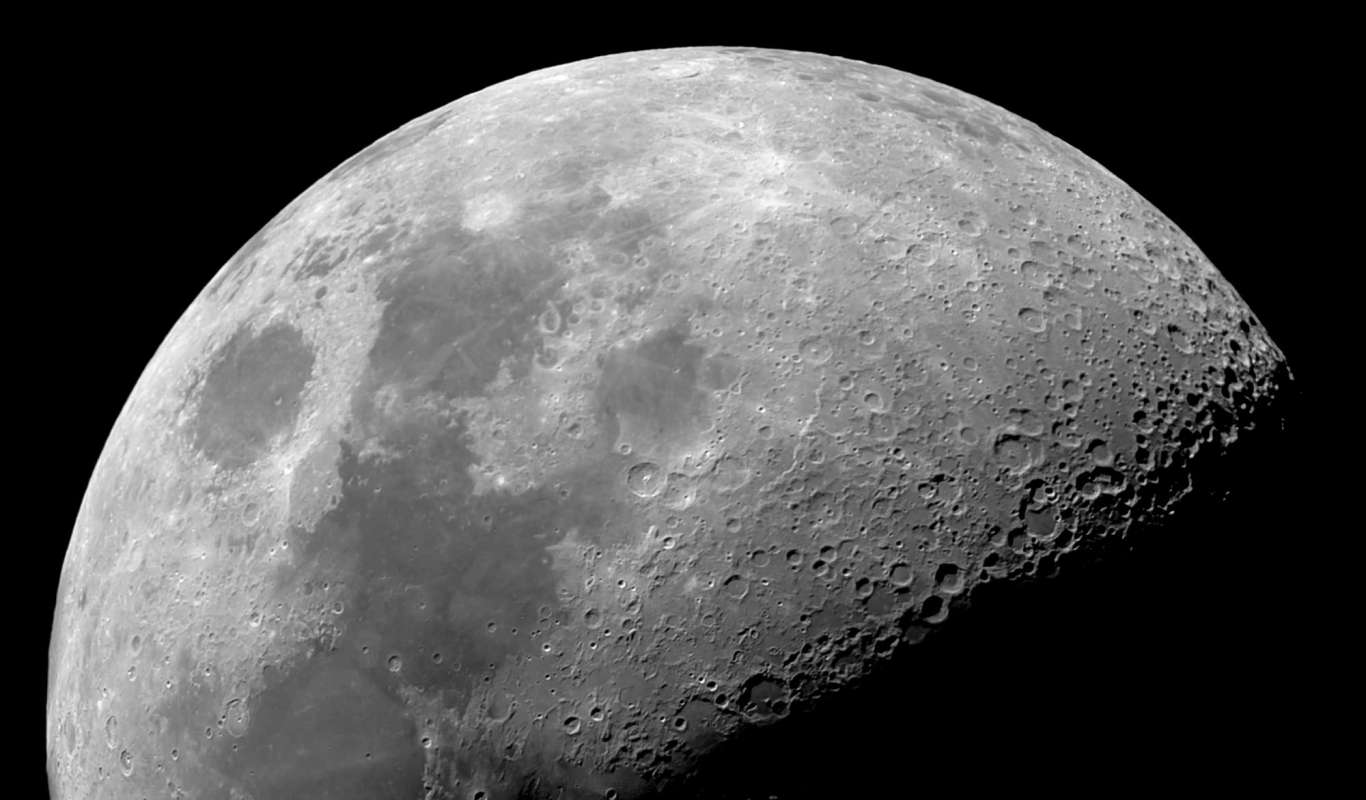
No Water, No Moon

 The arid prose of Zen aphorisms sometimes leave you thirsty. Yet something
shines through—something nameless, beyond all categories, and, in the best possible sense of the word, empty. Empty as in full of potential. Empty as in big enough to hold the whole world.

In his classic collection Zen Flesh, Zen Bones, (C.E. Tuttle Company, 1957) Paul Reps gathered together more than 160 such aphorisms, as elusive, fluid, and shimmering as trout in a stream. And none more evocative than the story of a woman named Chiyono.

“When the nun Chiyono studied Zen under Bukko of Engaku she was unable to attain the fruits of meditation for a long time. At last one moonlit night she was carrying water in an old pail bound with bamboo. The bamboo broke and the bottom fell out of the pail, and at that moment Chiyono was set free! In commemoration, she wrote a poem:

“In this way and that I tried to save the old pail. Since the bamboo strip was weakening, and about to break, until at last the bottom fell out. No more water in the pail! No more moon in the water!”

We meet Chiyono in a recognizable moment—the frustration many of us feel when after years of spiritual practice we find ourselves right back at the beginning, or nowhere at all – just as unhappy and scattered as we ever were. Was it all for nothing?

And then in the course of her ordinary work, carrying a pail of water from the well, something snapped—in this case, the bamboo strap holding the wooden slats of her pail together. As poetic images go, you can’t do better than this. Notice how we, like Chiyono, work so hard to keep it together, thinking we can manage the world, thinking we actually possess its treasures in our conceptual containers – our health, our money, our loved ones. But in a snap the lie of ownership is laid bare.

The true moment of satori (enlightenment) is her response to the pail-fail. Most of us would curse and complain, but years of practice prepared her for this shift. Instead of being angry, she’s relieved, even jubilant—“No more water in the pail! No more moon in the water!”

We do not own the air in our lungs, the water in our pails, or the love in our hearts—yet we need them to live. The very engines of our existence come from outside us, and are beyond control. We experience them, but we do not own them. The water in our pail retains its unity with the One Water—it only seems separate. And what a laughable confusion—to think our pail holds the moon because we see its reflection there. That is why part of us—a deep and unconscious part—recognizes Chiyono’s relief when the bottom falls out. The charade was exhausting. It turns out attachment was the root of our suffering.

What a sense of freedom it would be to finally let go and realize that not only is there nothing to grasp, there isn’t anyone to do the grasping. All forms are empty, in the best possible sense of the word—fluid, ephemeral, shimmering. We are fleeting moments in an interconnected field of energy, consciousness, and matter without border or boundary. Sure, we still need to bring water into the kitchen to cook our rice, but we do so now with a sense of engagement, not ownership or control. 

[This piece was first published in my column "A to Zen" in the May/June 2022 issue of Unity Magazine, and is reproduced here with permission.]