Showing posts with label meditation. Show all posts

Monday, September 4, 2023

Water Mind, Honey Mind

Great spiritual teachers have a way with words. Jesus, Buddha, Laozi, and countless others use the vernacular of their times to make eternal truths relevant to the context of this moment, this culture, and these challenges. One such teacher is Indian guru Nisargadatta Maharaj (1897-1981).

In a now classic collection of transcriptions of his talks called I Am That, a vivid portrait emerges of an ordinary man who, through a series of extraordinary experiences found himself in the role of spiritual teacher (guru) to seekers from all over the world. Nisargadatta never claimed special status, and assiduously avoided the trappings of spiritual stardom. He ran a humble tobacco shop in Mumbai, and received visitors in his tiny apartment above the store. A tape recorder preserved the dialogues, and I Am That was born.

            Nisargadatta taught non-duality, or Advaita Vedanta, the Hindu school of thought that claims that all is one. What sets him apart from other Vedanta teachers is the plain language and down-to-earth style of his message. While deeply indebted to his own guru, and respectful of the ancient lineage of which he is a part, his message was clear—teachers point the way, but in the end you are your own best guru. If we are one with the sacred ground of being, then we all carry within us that which we seek. Ceaselessly looking outside ourselves for wisdom only prolongs our confusion.

            “Gurus are like milestones,” he said. “It is natural to move from one to another. Each tells you the direction and the distance, while the sadguru, the eternal Guru, is the road itself. Once you realize that the road is the goal and that you are always on the road, not to reach a goal, but to enjoy its beauty and wisdom, life ceases to be a task and becomes natural and simple, in itself an ecstasy.” In an age when so many define themselves as “spiritual, but not religious” these words are like medicine. It’s okay to doubt, it’s okay to draw sustenance from different spiritual and religious sources, it’s okay to look back over your life and see a meandering path. Everywhere you went, and in every community you joined, you found milestones to mark the journey into the depths of your own authentic oneness.

            In one particularly striking image, Nisargadatta offers counsel to all of us who struggle with our meditation practice, and the persistent distractions of the thought-stream. Regarding our thoughts, Nisargadatta says, “Your very fighting them gives them life. Just disregard. Look through…It is disinterestedness that liberates. Don’t hold on, that is all. The world is made of rings. The hooks are all yours. Make straight your hooks and nothing can hold you.”

With the simple image of hooks and rings Nisargadatta quells our default addictive acquisitiveness—the strange habit we have of always holding onto everything as if we owned it. Simply straighten the hooks. Be deeply and intimately present with everything we love, but without the consciousness of ownership.

            In another image, Nisargadatta points to the possibility of true serenity available to us all. “The mind exists in two states: as water and as honey. The water vibrates at the least disturbance, while the honey, however disturbed, returns quickly to immobility.” As we move through this next busy week, reflect on your own reactivity to all of the triggers around us. Are we the water or are we the honey?

______________________________________________

All quotes from:

Nisargadatta Maharaj, I Am That, Translated by Maurice Frydman, Edited by Sudhakar S. Dikshit (Acorn Press: Durham, North Carolina, 1973)

[This piece was first published in my "A to Zen" column in the September/October 2023 edition of Unity Magazine, and is reproduced here with permission.]

Tuesday, April 12, 2022

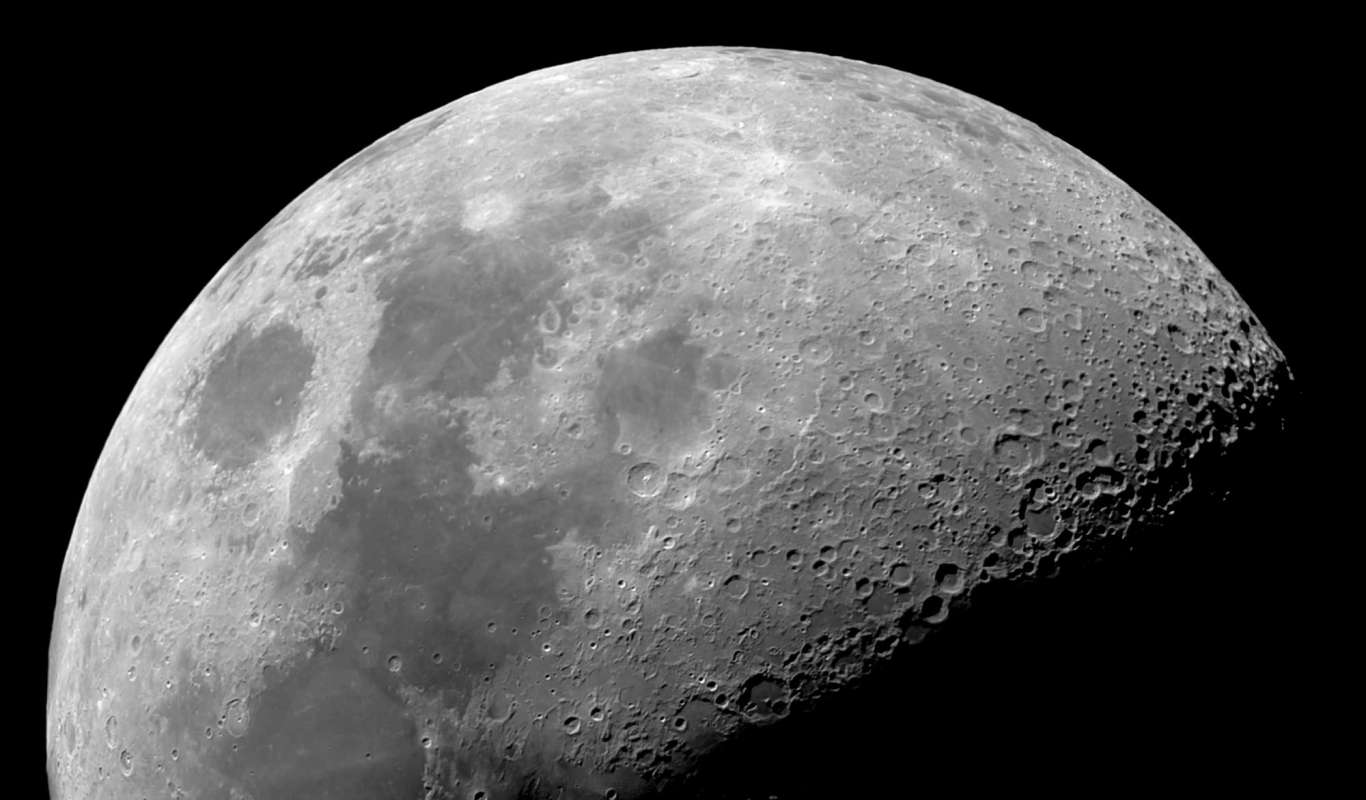
No Water, No Moon

 The arid prose of Zen aphorisms sometimes leave you thirsty. Yet something
shines through—something nameless, beyond all categories, and, in the best possible sense of the word, empty. Empty as in full of potential. Empty as in big enough to hold the whole world.

In his classic collection Zen Flesh, Zen Bones, (C.E. Tuttle Company, 1957) Paul Reps gathered together more than 160 such aphorisms, as elusive, fluid, and shimmering as trout in a stream. And none more evocative than the story of a woman named Chiyono.

“When the nun Chiyono studied Zen under Bukko of Engaku she was unable to attain the fruits of meditation for a long time. At last one moonlit night she was carrying water in an old pail bound with bamboo. The bamboo broke and the bottom fell out of the pail, and at that moment Chiyono was set free! In commemoration, she wrote a poem:

“In this way and that I tried to save the old pail. Since the bamboo strip was weakening, and about to break, until at last the bottom fell out. No more water in the pail! No more moon in the water!”

We meet Chiyono in a recognizable moment—the frustration many of us feel when after years of spiritual practice we find ourselves right back at the beginning, or nowhere at all – just as unhappy and scattered as we ever were. Was it all for nothing?

And then in the course of her ordinary work, carrying a pail of water from the well, something snapped—in this case, the bamboo strap holding the wooden slats of her pail together. As poetic images go, you can’t do better than this. Notice how we, like Chiyono, work so hard to keep it together, thinking we can manage the world, thinking we actually possess its treasures in our conceptual containers – our health, our money, our loved ones. But in a snap the lie of ownership is laid bare.

The true moment of satori (enlightenment) is her response to the pail-fail. Most of us would curse and complain, but years of practice prepared her for this shift. Instead of being angry, she’s relieved, even jubilant—“No more water in the pail! No more moon in the water!”

We do not own the air in our lungs, the water in our pails, or the love in our hearts—yet we need them to live. The very engines of our existence come from outside us, and are beyond control. We experience them, but we do not own them. The water in our pail retains its unity with the One Water—it only seems separate. And what a laughable confusion—to think our pail holds the moon because we see its reflection there. That is why part of us—a deep and unconscious part—recognizes Chiyono’s relief when the bottom falls out. The charade was exhausting. It turns out attachment was the root of our suffering.

What a sense of freedom it would be to finally let go and realize that not only is there nothing to grasp, there isn’t anyone to do the grasping. All forms are empty, in the best possible sense of the word—fluid, ephemeral, shimmering. We are fleeting moments in an interconnected field of energy, consciousness, and matter without border or boundary. Sure, we still need to bring water into the kitchen to cook our rice, but we do so now with a sense of engagement, not ownership or control. 

[This piece was first published in my column "A to Zen" in the May/June 2022 issue of Unity Magazine, and is reproduced here with permission.]

Sunday, October 24, 2021

My Coyote Teacher

I live in San Diego. I know, I’m lucky that way.

Yesterday as I was doing yoga on the back deck, my dog began to bark. The breeze through the Eucalyptus trees and the coos of mourning doves were instantly replaced by the most jarring alarm calls my dog knows how to make. My breath quickened and the hair on the back of my neck stood up.

I guess I’ll meditate later.

I peered over the back fence into the field of chaparral that slopes down to the lake in the distance. There he was, six feet from the gate – the biggest, healthiest coyote I’ve ever seen.

Coyotes are a part of life around here, as they are in many places. In the dawn’s early light they’re often seen trotting home after a night of foraging. We’re regularly awakened by their yipping, mewling, howling, and barking as they convene their mysterious meetings in these fields beneath the stars.

But this was different.

He was alone, walking slowly, deliberately through the mid-morning light. His coat was thick. He looked strong and at ease with the world. Something opened inside of me – a wordless knowing, a content-free awareness. Being beyond all categories was showing itself in the simplicity of this moment.

His slow-walk recalled the walking meditation of Thich Nhat Hanh, the Vietnamese Zen teacher who used to lead his students meditatively along the dirt paths around the monastery, aligning each step with a breath, moving silently, deliberately, lovingly through the garden. This was holy like that.

Then he stopped and stood in the shade of a tree, turning away from me. I stood too. We stayed like that for ten, maybe fifteen minutes. I don’t know. Time skittered off its rails.

I felt his presence, his absolute aliveness, his unadorned being-ness, without a whiff of artifice or pretense – how unlike him we are, caught up in the never-ending pageant of trying to make a good impression and checking our look in the mirror. His naturalness started me. His shocking authenticity slapped me across the face.

What would it be like to be free from the never-ending plans, desires, and so-called needs that torment us? What would it be like to show up without apology, without explanation, without excuse? What would it be like to live always in harmony with current conditions, without the burden of endlessly wishing things were different than the way they are? What would it be like to be free of endless speculations, ornate plans, egoic ambitions, and the need to be special?

These were the questions my visitor elicited in me.

Then he turned and ambled off.

Great teachers don’t tell you what to think. They help you ask better questions. My coyote teacher inspired a whole series of bracing, transformative queries. Of course I want to stop short of anthropomorphizing that wild animal, and imposing all kinds of stories and qualities on him that are purely the fruit of my own fervid imagination. But this fact remains: coyotes have been living in these hills for 400,000 years. Our civilization is a blip on that time-line – here and gone. Yet in the timeless eternity of this now moment, when we meet one another in authenticity, we all enter the heaven that has no name; a condition of consciousness the great religions can only point to. This is the holiness ever-present that we miss solely by paying attention to the wrong things.

[This piece was originally published in my column "A to Zen" in the Nov/Dec 2021 issue of Unity Magazine, and is reproduced here with permission.]

Monday, June 7, 2021

Still Water Runs Deep

 When water courses through a narrow passage it speeds up. When the canyon opens into a wide valley, then an open meadow, the water slows to stillness – the river becomes a lake.

            So too when we rush about on our important errands, crushing our to-do lists like a boss, something is lost.

            The narrower and more constrained our lives become, the more turbulent the course of our thought-stream. Only in the stillness of contemplative prayer, meditation, or restful pause do we root back down into the ground of being, instead of skittering across life’s surface – unsure where we’ve been, unclear where we’re going, and never knowing why.

            Without periods of stillness, all movement becomes meaningless. As Mozart said, “The music is not in the notes, but in the silence between.”

            This is why, after over a year of pandemic quarantine, cooped up in our home offices and narrow routines, our morning and afternoon walks took on such sacred significance. To be out under a wide open sky, knowing that the stars arch over us like a jeweled lattice, obscured by the midday sun, then emerging one by one as night turns the sky indigo denim, then black velvet. So too the glare of busyness blinds us to the unfathomable beauty ever-present.

            Truth is never far away. We’re simply paying attention to the wrong things. We don’t have a proximity problem – we have a perception problem.

            It is time to recommit to our contemplative prayer and meditation practice. Taking our cue from nature, we see that all things turn through cycles of decay and regeneration, silence and sound, darkness and light. So too we spend long hours of each 24 hour cycle completely unconsciousness, unaware of our surroundings. And it is through the long, fallow night that our mind-body restores itself to newness. Following this model, may we learn to better step outside the stream of busyness that threatens to drown us in its lifeless undertow and instead, climbing out onto the warm, flat rocks midstream, rest in the sun, and simply be. Nothing less than heaven itself awaits in the gaps between each harried thought.

            I think we are simply afraid – afraid to fully trust ourselves. That’s why we rush about in search of the next answer, the next church, the next coach, or the next book. Fear drives us like a lash. Instead, coming into a rare and unrehearsed intimacy with our innermost depths, we find a rest so complete, so natural, and so healing that we wonder what we were ever afraid of. The mystics of all traditions tell of this inner space, this boundless realm beyond all doctrine, dogma, theology, and belief – a place of nameless wisdom and voiceless song. What we hear and know there can never be brought to the surface. The formless cannot take form. But we can be in-formed by it. It leaves a mark. We carry its scent into the activities of our ordinary lives. The only word that even comes close for this transformative knowing – love – sounds tinny and trite in the cacophony of the marketplace. Oh, that cliché, they say. We simply smile. Yeah, we know. So it’s better to say nothing at all, letting our actions do the talking. As Jesus told his disciples in the days before his death, “By this everyone will know that you are my disciples, if you have love for one another.” (John 13:35 NRSV)

[This piece first appeared in my "A to Zen" column in the July/August edition of Unity Magazine, and is reproducted here with permission.]