Showing posts with label nonduality. Show all posts

Saturday, April 27, 2024

God is the Ground

In the 14th century, Norwich was the second largest city in England, after London. The Bubonic Plague, a pestilence of Biblical proportions, had killed half its residents. Surviving the Plague, and shaped by unimaginable loss, a woman known to us only as Julian of Norwich lived a quiet life as an anchoress to a convent—a lay contemplative committed to solitude, liturgy, and prayer. This life apart from traditional societal demands afforded her the opportunity to write, a rare occupation for any woman at that time. Her writings, eventually released a few centuries later, made her the first published female writer in English history.

            Today the mystical writings of Julian of Norwich are known the world over, especially to anyone interested in the startling intersections between Christian mysticism and the nondual wisdom traditions of the East. And they constitute a grand departure from the more punitive and male-centric theology of her Christian contemporaries.

            In mainstream 14th century Christianity, God was seen as a cosmic judge and punisher, dividing the damned from the saved. Sin was the great failing that separated us forever from God’s love. But in Julian hands, this paradigm is subverted. Our essential human nature, she argues, exists completely within God. Separation is impossible. Sure, sin is still a problem, and it causes most of our pain, but it’s a problem God has already solved. God’s delight is our liberation. And for Julian, God is simply another word for all that is. “Everything that is, has its being through the love of God,” she wrote. In her mystical visions or “showings,” she experienced Jesus saying, “All will be well and all will be well and every kind of thing shall be well.” No matter how bad things seem, we are already past the place where our problems have power. We just have to realize it.

            For Julian, God is more a presence than a person, a metaphysical reality in which we are already enfolded. When the apostle Paul said that God is where “we live and move and have our being,” (Acts 17:28), he was prefiguring a stance Julian would often express. “God is nearer to us than our soul,” she wrote, “for He is the ground in which it stands.” Like Christian mystics before and since, Julian sees God not as a transcendent being above and outside us, but as the very fabric of reality itself. God then is not to be sought, but simply allowed.

            The extent to which this perspective aligns with the Eastern wisdom traditions cannot be overstated. In the non-duality of the Vedanta school of Hinduism, and in Buddhism, the spiritual path is framed not as a process of becoming something we’re not, but a process of awakening to what we already are. And what we are is part and parcel of the oneness that encompasses all energy, matter, and consciousness. Realization is more a process of subtraction than addition, of removing hindrances rather than adding ornamentation. Our spiritual practices work best when they don’t clutter us up with more information, but dissolve our old ways of thinking.

            And it is from the intersections of Western and Eastern mysticism that New Thought was born in 19th century America. Across the spectrum of expression in the Unity Movement, Religious Science, and the rest, we see again and again this ancient impulse, that we already are what we seek, and that our longing for God is God’s longing for Itself.

[This piece first appeared in my column "A to Zen" in the May/June 2024 edition of Unity Magazine, and is reproduced here with permission. This is my final column for Unity Magazine.]

Monday, March 11, 2024

The Upside Down Tree


We came down from the trees three million years ago. They bear us fruit, shade our days, and fuel our fires. It’s no surprise they show up so often in our sacred literature.

            In Norse mythology the world tree Yggdrasil forms the axis mundi, the hub around which the wheel of reality turns. Countless gods across traditions were either born from trees or died on them. The Norse god Odin hung himself on Yggdrasil for nine days, just as Jesus was hung from a cross, the symbolic tree of the executioner. Buddha attained enlightenment under the Bodhi Tree, and the Na’vi of James Cameron’s Avatar held nothing more sacred than the Tree of Souls, the source of both the unity and multiplicity of divinity.

            Although the examples are many, one of the most beautiful is the upside-down tree of the Katha Upanishad, Hinduism’s most compelling wisdom tale.

            In the Katha Upanishad a young spiritual aspirant named Nachiketa goes on a mystical journey to visit Yama the Lord of Death—who better to answer his question, “What happens after we die?” Yama takes the boy under his wing and leads him (and us) through a landscape of metaphors, images, parables, and insights that have enraptured truth-seekers for two millennia.

Throughout Vedanta teaching, and in the Katha Upanishad in particular, we find a dizzying blend of dualism and non-dualism, and from the tension of this paradox springs the dynamic energy that propels the investigation forward. We are at once individual things, and aspects of one thing. The mind will of course resist this conundrum, but the heart feels its way through non-conceptual imagery and wordless awareness. This is where analogies like the upside-down tree wield the most power. In chapter 3, verse 1-2 Lord Yama says:

The Tree of Eternity has its roots above and its branches on earth below. Its pure root is Brahman the immortal, from whom all the worlds draw their life, and whom none can transcend. For this Self is supreme! The cosmos comes forth from Brahman and moves in him. With his power it reverberates like thunder crashing in the sky. Those who realize him pass beyond the sway of death.

            Brahman the formless, eternal, changeless sacred ground of being—ultimate reality beyond all thoughts and forms. Yet in this passage Brahman is also given a gender, and spoken of as though he were transcendent, or outside and above this world of forms. And we also see the term “Self” (Atman in Sanskrit)—the word for the presence of Brahman within all sentient beings. In the end, Brahman and Atman are two words for the same thing, at once transcendent and immanent. All matter, energy, and consciousness—in a word, all of this—is an expression of Brahman-Atman, appearing through the distorting refraction of maya as separate things, all the while maintaining its underlying unity and identity. The upside-down tree conveys this paradoxical unity and diversity at the core of Vedanta metaphysics, namely, that all is one, no matter what our perceptions say. And when we realize this, “we pass beyond the sway of death.”

            The task of every spiritual aspirant is to realize—to make real—this oneness. Intellectual, conceptual understanding falls short. Life, it turns out, is not a theological debate. It is a lived mystery, where words and concepts serve as vehicles whose value is to transport us to the realization beyond all of them.  

[This piece first appeared in my column A to Zen in the January/February 2024 issue of Unity Magazine, and is reproduced here with permission.]

Tuesday, April 12, 2022

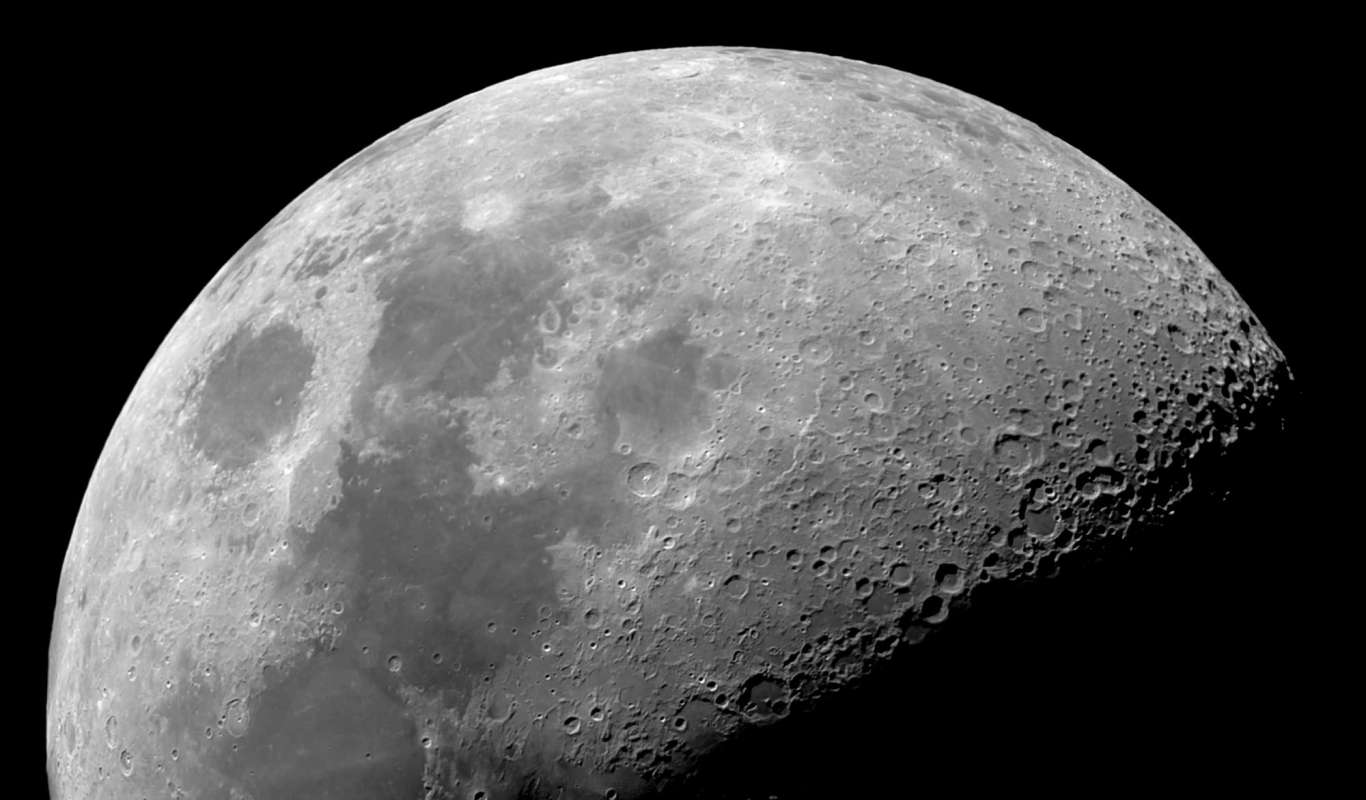
No Water, No Moon

 The arid prose of Zen aphorisms sometimes leave you thirsty. Yet something
shines through—something nameless, beyond all categories, and, in the best possible sense of the word, empty. Empty as in full of potential. Empty as in big enough to hold the whole world.

In his classic collection Zen Flesh, Zen Bones, (C.E. Tuttle Company, 1957) Paul Reps gathered together more than 160 such aphorisms, as elusive, fluid, and shimmering as trout in a stream. And none more evocative than the story of a woman named Chiyono.

“When the nun Chiyono studied Zen under Bukko of Engaku she was unable to attain the fruits of meditation for a long time. At last one moonlit night she was carrying water in an old pail bound with bamboo. The bamboo broke and the bottom fell out of the pail, and at that moment Chiyono was set free! In commemoration, she wrote a poem:

In this way and that I tried to save the old pail. Since the bamboo strip was weakening, and about to break, until at last the bottom fell out. No more water in the pail! No more moon in the water!

We meet Chiyono in a recognizable moment—the frustration many of us feel when after years of spiritual practice we find ourselves right back at the beginning, or nowhere at all – just as unhappy and scattered as we ever were. Was it all for nothing?

And then in the course of her ordinary work, carrying a pail of water from the well, something snapped—in this case, the bamboo strap holding the wooden slats of her pail together. As poetic images go, you can’t do better than this. Notice how we, like Chiyono, work so hard to keep it together, thinking we can manage the world, thinking we actually possess its treasures in our conceptual containers – our health, our money, our loved ones. But in a snap the lie of ownership is laid bare.

The true moment of satori (enlightenment) is her response to the pail-fail. Most of us would curse and complain, but years of practice prepared her for this shift. Instead of being angry, she’s relieved, even jubilant—“No more water in the pail! No more moon in the water!”

We do not own the air in our lungs, the water in our pails, or the love in our hearts—yet we need them to live. The very engines of our existence come from outside us, and are beyond control. We experience them, but we do not own them. The water in our pail retains its unity with the One Water—it only seems separate. And what a laughable confusion—to think our pail holds the moon because we see its reflection there. That is why part of us—a deep and unconscious part—recognizes Chiyono’s relief when the bottom falls out. The charade was exhausting. It turns out attachment was the root of our suffering.

What a sense of freedom it would be to finally let go and realize that not only is there nothing to grasp, there isn’t anyone to do the grasping. All forms are empty, in the best possible sense of the word—fluid, ephemeral, shimmering. We are fleeting moments in an interconnected field of energy, consciousness, and matter without border or boundary. Sure, we still need to bring water into the kitchen to cook our rice, but we do so now with a sense of engagement, not ownership or control. 

[This piece was first published in my column "A to Zen" in the May/June 2022 issue of Unity Magazine, and is reproduced here with permission.]